
What Is Advance Tax and Who Should Pay It in India? Rules, Limits & Simple Example
Advance tax is income tax paid in instalments during the year when your net tax due exceeds ₹10,000. Learn who must pay, key rules, and how to pay it.
by James
Published Feb 20, 2026 | Updated Feb 20, 2026 | 📖 4 min read
Article continues below advertisement
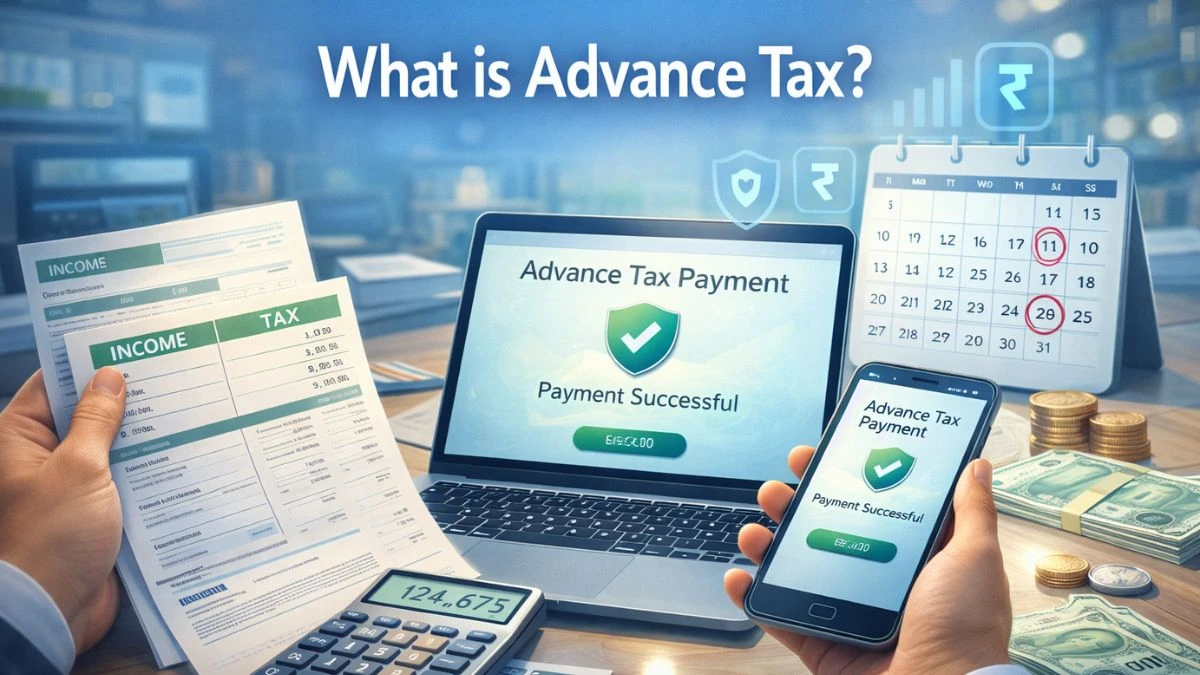
What is Advance Tax?
Advance tax is basically income tax that’s paid in parts during the year, instead of one big hit at the end when filing the return. The phrase often used is “pay-as-you-earn,” and that’s exactly how it works: as the income comes in, the tax goes out in instalments.
It’s especially relevant in India for people whose income isn’t 100% handled by TDS, like freelancers, investors, or small business owners, because waiting till July to see the total tax bill can be… unpleasant.
From a system point of view, advance tax is covered under sections 207 to 219 of the Income Tax Act and is calculated on estimated total income for the financial year, after considering deductions and TDS.
The tax is then paid through fixed-percentage instalments by specific due dates announced by the Income Tax Department. It helps the government smoothen its cash flow, but it also helps taxpayers avoid sudden large outflows and extra interest under sections 234B and 234C for underpayment.
A very common real-life pattern: someone starts earning from YouTube or side consulting, thinks “employer TDS is covering everything,” and then discovers at year-end that the extra income has pushed tax due well above the threshold, with interest added. That’s usually when advance tax suddenly starts sounding less like a technical term and more like basic financial self-defence.
Who Should Pay Advance Tax?
Advance tax should be paid by anyone whose total income tax liability for the year is more than ₹10,000 after adjusting for TDS and TCS. This applies across categories: salaried individuals with extra income, business owners, professionals, companies, LLPs, and even NRIs earning income from India.
In simple terms, people typically covered include:
- Salaried individuals with rental income, capital gains, interest, or side hustles where TDS doesn’t fully cover tax.
- Freelancers, consultants, and self‑employed professionals once their net tax due crosses that ₹10,000 mark.
- Proprietorships, partnership firms, LLPs, and companies of all sizes.
- NRIs with Indian‑source income that triggers tax liability beyond ₹10,000.
There is one very important and often-missed relief: resident senior citizens aged 60 or above who do not have income from business or profession are exempt from advance tax, even if their tax liability crosses ₹10,000.
Everyone else, including senior citizens with business income, is treated like any other taxpayer for advance tax. A typical scenario: a salaried person with ESOP gains and some crypto trades assumes HR has “handled taxes,” but those extra gains create a clear advance tax obligation once the total net tax goes beyond the threshold.
How to Pay Advance Tax?
Advance tax can be paid either online through the Income Tax e-filing portal or offline at authorised bank branches using the prescribed challan. These days, most people prefer the online route because it’s quicker, traceable, and avoids queues and partially filled forms at bank counters.
A straightforward online path looks like this:
- Go to the official income tax portal (incometax.gov.in) and log in with PAN and password.
- Navigate to the “e-Pay Tax” section and choose “Income Tax” / “Advance Tax (100)” for the correct assessment year.
- Enter tax details (amount after considering TDS and previous instalments), select payment mode like net banking, debit card, UPI, or NEFT/RTGS, and confirm.
- Once done, download and safely store the challan or receipt with BSR code and CIN; this becomes important at the time of ITR filing.
Offline, advance tax can still be paid via Challan 280 at designated bank branches by filling in PAN, assessment year, tax type, and amount, then paying in cash, cheque, or through bank instructions.
Many small business owners who were used to this paper challan habit are slowly moving online because the portal now provides immediate confirmation and less scope for data entry errors. When planned properly estimating income, tracking due dates like 15 June, 15 September, 15 December, and 15 March, and adjusting instalments as income becomes clearer advance tax stops feeling like a penalty trap and starts working like a disciplined way to manage yearly tax outgo.
Disclaimer
The information provided here is for general educational and awareness purposes only and should not be treated as professional tax, legal, or financial advice. Tax rules, thresholds, and procedures are subject to change based on amendments to law, official notifications, and yearly Budget updates. Readers should always verify details with the latest government notifications, consult a qualified tax professional or chartered accountant, and consider their own income, deductions, and compliance requirements before making any tax-related decisions.
Related Articles


Long-Term Capital Gains Tax Rates 2025
219 days agoWhat is Advance Tax - FAQ's
1. What is advance tax in simple terms?
Advance tax is income tax paid in parts during the same financial year instead of paying the whole amount at the time of filing your ITR. It works on a “pay-as-you-earn” basis so that tax is cleared gradually as income is earned.
2. Who is required to pay advance tax?
Any taxpayer whose total income tax liability for the year is more than ₹10,000 after adjusting TDS/TCS is required to pay advance tax. This typically includes salaried people with extra income, freelancers, business owners, investors, and companies.
3. Are senior citizens required to pay advance tax?
Resident senior citizens (60 years or above) who do not have income from business or profession are generally not required to pay advance tax. If they earn business or professional income, the usual advance tax rules apply.
4. What happens if advance tax is not paid or is underpaid?
If advance tax is not paid, or the amount paid is too low compared to the final tax liability, interest may be charged under the Income Tax Act (commonly under sections like 234B and 234C). This increases the total outgo when filing the return.
5. What are the usual due dates for paying advance tax?
For most taxpayers, advance tax is paid in four instalments in a financial year: On or before 15 June, On or before 15 September, On or before 15 December, On or before 15 March.
Disclaimer : The above information is for general informational purposes only. All information on the Site is provided in good faith, however we make no representation or warranty of any kind, express or implied, regarding the accuracy, adequacy, validity, reliability, availability or completeness of any information on the Site.