
What Is Zero Depreciation Car Insurance in India? Meaning, Benefits, and Who Should Take It
Zero depreciation car insurance in India is an add-on that lets you claim without deduction for part wear and tear. Learn how it works, benefits, and who should buy it.
by James
Published Feb 18, 2026 | Updated Feb 18, 2026 | 📖 4 min read
Article continues below advertisement
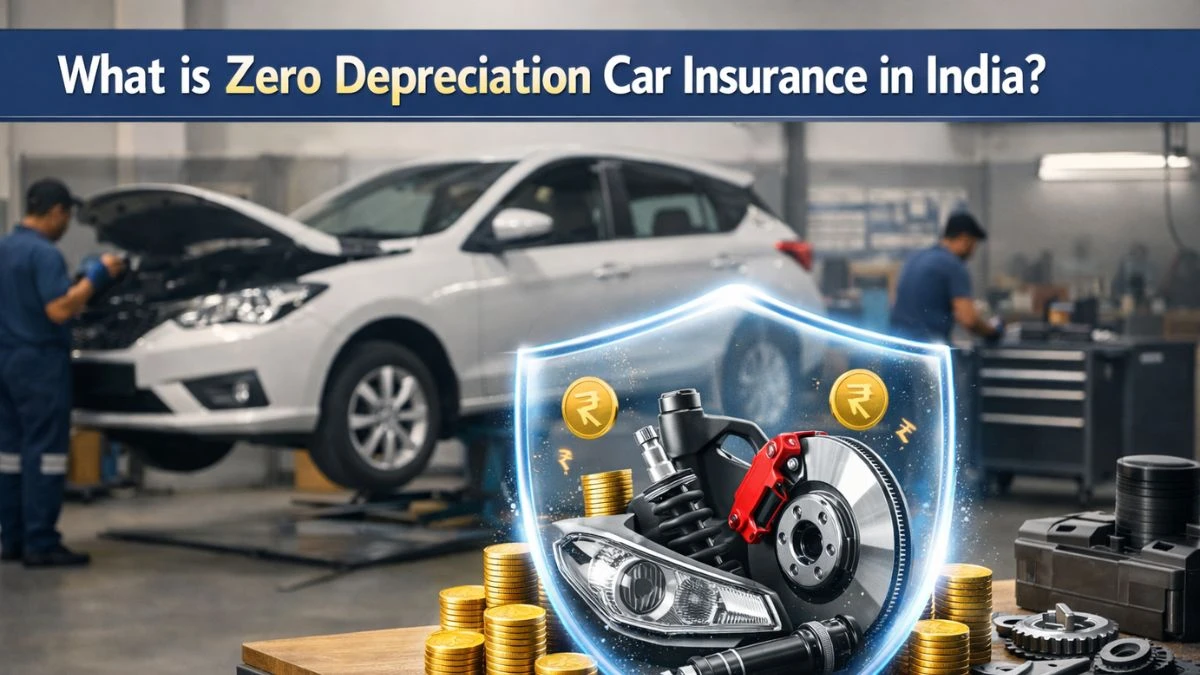
What is Zero Depreciation Car Insurance in India?
Zero depreciation car insurance in India is an add-on cover that ensures the insurer does not deduct depreciation on parts while settling a claim. Normally, when a car ages, every part is assigned a depreciation rate, so during an accident claim, the insurer pays only after cutting that percentage and the rest quietly falls on the owner’s pocket.
With zero dep, most of that cut just disappears, and the claim amount goes closer to the actual repair bill, especially for rubber, plastic and fibre parts.
A relatable example: imagine a front bumper and headlight replacement costing around ₹50,000; under a standard comprehensive policy with 20% depreciation, the owner may end up paying about ₹10,000 from pocket, while under zero dep, the insurer can cover the full ₹50,000 (excluding deductibles and small charges). Many car owners discover this only after their first major claim and quietly promise to “never skip zero dep again” while standing at the workshop counter.
How Does Zero Dep Actually Work?
Zero dep works as an optional add-on to a comprehensive car insurance policy, not as a standalone plan. When a claim is raised, the surveyor calculates the repair cost and depreciation on parts, but if zero dep is active, that depreciation portion is not deducted from the insurer’s payout for covered parts.
Most insurers in India offer this add-on only for relatively new cars, commonly up to 3–5 years of age, because depreciation impact is highest and claims are more frequent in those years.
There are usually conditions: a limited number of zero dep claims in a policy year, mandatory use of network garages, and no coverage for things like engine damage due to oil leakage or regular mechanical breakdowns. So it feels generous, but it is still tightly framed by rules in the policy wording.
Key Features and Benefits
The big benefit of zero depreciation is higher claim payout and lower out-of-pocket expenses during accidental repairs. It essentially boosts the coverage of a normal comprehensive policy by neutralising the depreciation impact on most parts.
In day-to-day terms, people find value in a few clear ways:
- Repair bills after a crash feel less painful because the insurer bears a larger chunk.
- Premium is higher than a normal comprehensive plan, but many owners see it as a kind of “peace-of-mind fee” for the first few years of the car’s life.
- It is especially handy for cars loaded with expensive cosmetic parts, sensors, and stylish bumpers that are easy to damage, harder to pay for.
There is a subtle emotional side too: knowing accidental scratches or minor crashes won’t burn the wallet as much often makes owners less anxious on crowded city roads and during highway trips.
Who Should Really Consider Zero Dep in India?
Zero dep is most useful for new car owners, luxury or premium car owners, people living in accident-prone or high-traffic city areas, and new or less confident drivers. For these groups, even one medium-sized claim in a year can justify the extra premium paid for the add-on.
An everyday scenario plays out in most Indian metro cities: a brand-new hatchback or compact SUV gets rear-ended in peak traffic; the owner walks into the service centre worried, only to be told the zero dep add-on has covered almost the entire repair cost apart from compulsory deductibles.
On the other side, owners of older cars with dropping market value often quietly shift away from zero dep after a few years, deciding that the higher premium is no longer matching the car’s current worth. This balance between premium, age of car, and real-world risk is where the “smart” decision usually sits.
Zero Dep vs Normal Comprehensive Policy
A quick, slightly informal snapshot helps:
|
Aspect |
Zero Dep Add-on (with Comprehensive) |
Only Comprehensive Policy |
|---|---|---|
|
Depreciation on parts |
Not deducted on covered parts |
Deducted as per age slabs |
|
Claim payout |
Higher, closer to full repair cost |
Lower due to depreciation cuts |
|
Premium |
Higher because of extra protection |
Relatively lower |
|
Ideal for |
New, premium, or city-driven cars; new drivers |
Older cars; low annual running |
Disclaimer:
This article is for general information only and does not constitute financial, tax or insurance advice. Policy terms, features and premiums vary by insurer. Always read the policy wording carefully and consult a qualified advisor or insurer representative before making any car insurance purchase or renewal decisions.
Related Articles


What is Deductible in Health Insurance?
91 days ago

What is Zero Depreciation Car Insurance in India - FAQ's
1. What is zero depreciation car insurance in India?
Zero depreciation car insurance is an add-on cover that ensures the insurer does not deduct depreciation on parts while settling an accident claim, so the claim amount is higher and closer to the actual repair cost.
2. Is zero depreciation car insurance mandatory in India?
No, zero depreciation cover is not mandatory. It is an optional add-on that can be taken along with a comprehensive car insurance policy for extra protection, especially for new or high-value cars.
3. Who should take zero depreciation car insurance?
Zero dep is generally recommended for new car owners, luxury or premium car owners, first-time drivers, and people driving mostly in heavy-traffic city conditions where minor accidents and bumper-to-bumper hits are common.
4. How long can zero depreciation cover be taken for a car?
Most insurers offer zero depreciation cover for cars up to 3–5 years old. After this period, many companies either stop offering it or provide it with stricter conditions and higher premiums.
5. What is not covered under zero depreciation car insurance?
Zero dep usually does not cover regular wear and tear, mechanical or electrical breakdowns, engine damage due to oil leakage or water ingression, and situations where the policy terms like timely renewal or a valid driving licence, are not met.
Disclaimer : The above information is for general informational purposes only. All information on the Site is provided in good faith, however we make no representation or warranty of any kind, express or implied, regarding the accuracy, adequacy, validity, reliability, availability or completeness of any information on the Site.