- Home »
- Credit Card »
- What Is a Contactless Payment? Tap‑to‑Pay Explained in Simple Terms
What Is a Contactless Payment? Tap‑to‑Pay Explained in Simple Terms
Contactless payment is a tap‑to‑pay method using NFC where you just tap your card or phone near a machine to pay, often without PIN, for fast and secure checkout.
by James
Published Feb 20, 2026 | Updated Feb 20, 2026 | 📖 4 min read
Article continues below advertisement
What Is a Contactless Payment?
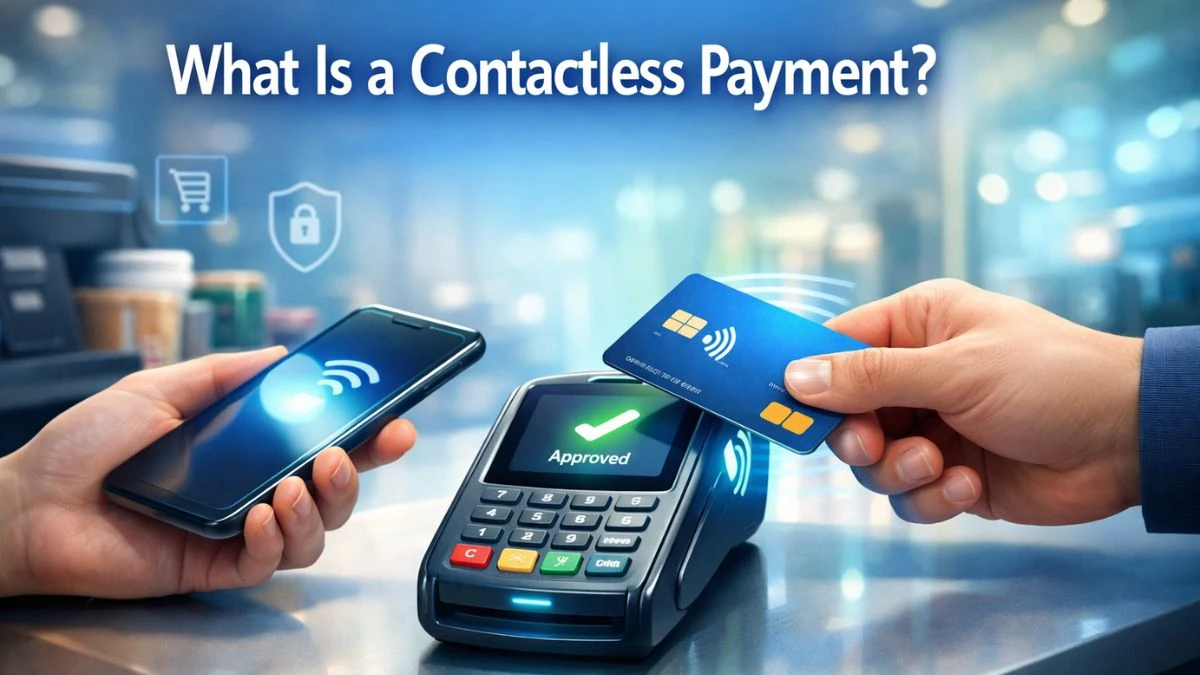
A contactless payment is a secure, tap‑and‑go way to pay using a card, smartphone, smartwatch or other device, without physically inserting or swiping anything in the card machine.
Technically, it relies on NFC (near field communication), which is a short‑range wireless technology used to send encrypted payment data when your card or device is held a few centimeters from the reader. You’ll usually see a sideways Wi‑Fi style symbol on both the card and the payment terminal – that’s the subtle hint that “hey, you can just tap here.”
In practice, contactless shows up in everyday life more than people realise: paying for groceries, metro rides, tolls, movie tickets, even tiny café bills where the card machine hardly leaves the barista’s hand.
The big shift is psychological – we’ve gone from “card equals serious payment step” to tapping for even small amounts, very similar to how UPI or mobile wallets made small payments feel casual and quick.
Contactless Payment Limit
Every country and bank sets a limit for contactless transactions essentially, the maximum amount you can pay without entering your PIN. This cap helps balance convenience with security.
In India, for example, most banks allow up to ₹5,000 per contactless transaction without asking for a PIN. Anything above requires one for extra safety. It’s worth checking with your specific bank, though, since some international cards may have different settings.
Why the limit? Simple it’s protection in case the card is lost or stolen. You wouldn’t want someone buying a luxury watch on your card just because they “tapped” it at the counter. Even with that, the system is designed to flag suspicious behavior, so banks monitor multiple small transactions within short time windows.
Contactless Payment Card
A contactless payment card looks just like any regular debit or credit card but has a little wave-like symbol (that’s the NFC sign). It lets you pay by holding the card close to a compatible terminal. No insertion, no swiping just a gentle tap and confirmation beep.
Many newer cards automatically support this feature. When issued by banks today, they usually arrive ready for NFC payments. What’s great is that:
- The card never leaves your hand, reducing the risk of skimming.
- Transactions are encrypted, keeping data secure.
- It’s accepted globally across millions of terminals.
In a lot of places, customers barely notice the transaction the cashier might say “you’re good!” before you’ve even put the card back in your wallet.
Debit Card Contactless Payment
A debit card contactless payment is when the tap‑and‑go feature is linked directly to your bank account instead of a credit line. The experience at the counter is identical – you tap, the terminal beeps, and the amount is deducted – but in the background the money comes straight from your linked account balance.
Banks issue contactless debit cards that work both ways: you can wave or tap them at POS terminals using NFC, and you can still dip, swipe, or use them at ATMs as usual. For smaller purchases (up to the permitted limit, like ₹5,000 per tap in India), payment can often be completed without a PIN, which makes things fast for day‑to‑day spending like groceries, transport, or coffee runs. For higher amounts or after several consecutive taps, the system may ask for PIN or extra authentication, which balances convenience with security.
A lot of people gradually build trust by starting with tiny spends – a bus fare here, a snack there – and once they see the transactions correctly reflected in their banking app, contactless quietly becomes their default way to use the debit card.
Other Useful Bits About Contactless Payments
Contactless isn’t just about cards; phones, smartwatches, and even NFC‑enabled rings or key fobs can act as payment devices when linked to a bank card or wallet. This opens up interesting everyday scenarios – paying while your physical wallet is buried somewhere in a backpack, or when you’re out for a run and only carrying a watch.
For anyone worried about safety, two points usually help:
- The card or device needs to be very close (a few centimeters) for a transaction to go through, and
- Each tap uses a unique, transaction‑specific code, making it difficult for attackers to clone or reuse.
- Used sensibly – with basic precautions like blocking a lost card quickly and checking statements – contactless payments strike a practical balance between modern convenience, security measures, and real‑world everyday use.
Related Articles


What Is a Contactless Payment - FAQ's
1. What is meant by contactless payment?
Contactless payment is a digital method that allows users to pay by simply tapping a card, phone, or smartwatch near an NFC-enabled terminal no physical contact or PIN needed for smaller transactions.
2. Is contactless payment safe to use?
Yes, contactless payments are highly secure. Each transaction uses encrypted data, and banks set limits to prevent misuse in case a card is lost or stolen.
3. What is the contactless payment limit in India?
As of now, most banks in India allow tap-to-pay transactions up to ₹5,000 without a PIN. For amounts above this limit, users must enter their PIN for added security.
4. How to know if my card supports contactless payment?
Check for the small wave-like symbol on your debit or credit card. If it’s there, your card supports NFC payments and can be used for tap-to-pay.
5. Can I disable contactless payment on my card?
Yes, most banks allow users to enable or disable contactless functionality via internet banking, mobile apps, or by contacting customer support.
Disclaimer : The above information is for general informational purposes only. All information on the Site is provided in good faith, however we make no representation or warranty of any kind, express or implied, regarding the accuracy, adequacy, validity, reliability, availability or completeness of any information on the Site.