
- Home »
- Credit Card »
- Does Closing a Credit Card Affect Credit Score? CIBIL Impact Explained for 2026
Does Closing a Credit Card Affect Credit Score? CIBIL Impact Explained for 2026
Wondering if closing a credit card affects your credit score? Learn how it impacts your CIBIL score, credit utilisation, history length, and when it’s safe to cancel.
by Alaguvelan M
Published Feb 18, 2026 | Updated Feb 18, 2026 | 📖 7 min read
Article continues below advertisement
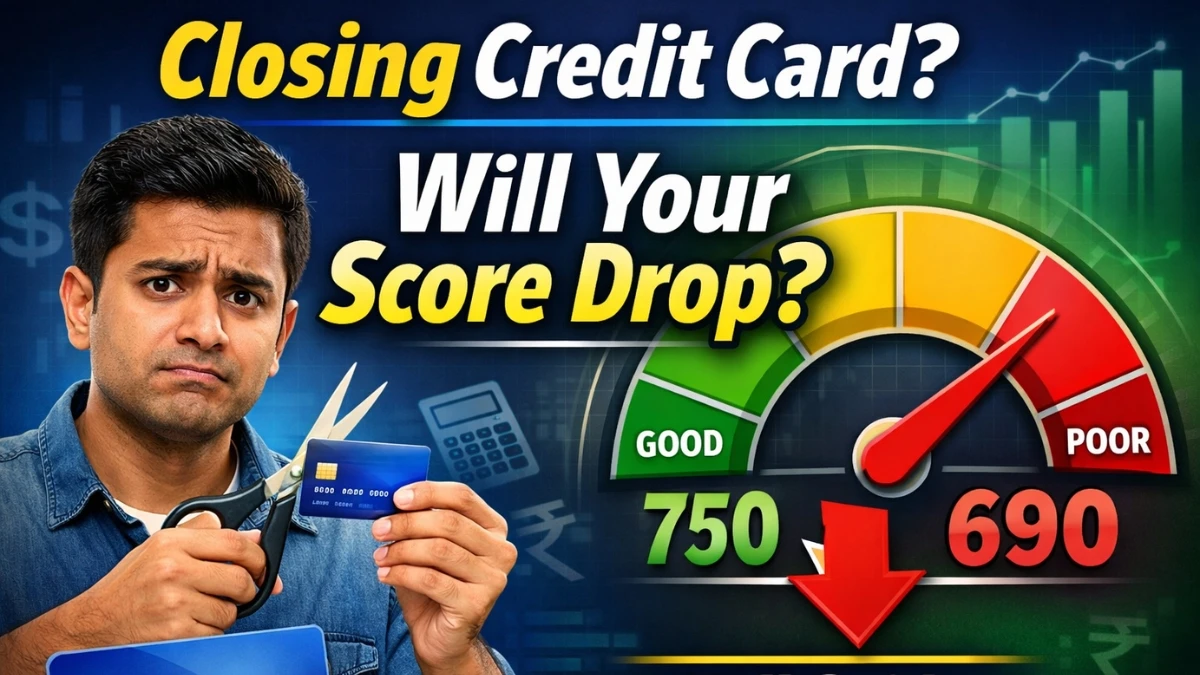
Does Closing a Credit Card Affect Your Credit Score? Full Guide Explained
Hey, if you're staring at that credit card statement thinking, "This annual fee is killing me, should I just cancel it?", you're asking a super common question in India right now. Closing a credit card can definitely impact your CIBIL score (and scores from other bureaus like Experian or CRIF High Mark), but it's not always a disaster.
The short answer: Yes, it often hurts your score in the short to medium term, mainly because it messes with your credit utilisation ratio and can shorten your average credit history.
But the hit depends on your overall profile, how many cards you have, your balances, and which card you're closing.
Let's break it down properly so you can decide if it's worth it or if there's a smarter move.
How Credit Scores Work
Your CIBIL score (ranging from 300 to 900) is basically a snapshot of how responsibly you've handled credit. Higher scores open doors to better loan rates, higher limits, and easier approvals.
The main factors that feed into it are:
- Payment history: This is huge (around 35%). Paying on time every time builds trust.
- Credit utilisation ratio: About 30%. This is how much of your available credit you're actually using (balances divided by total limits). Lower is better. ideally under 30%, and even better under 10% for top scores.
- Length of credit history: Roughly 15%. Longer, well-managed history shows stability.
- Credit mix: Around 10%. A blend of revolving credit (like cards) and instalment loans (like home or car loans) looks good.
- New credit enquiries: The rest. Too many in a short time can ding you.
Credit utilisation and history length are the big ones that get hit when you close a card.
Does Closing a Credit Card Affect Credit Score?
Yes—it usually does, and mostly negatively, at least temporarily. Closing reduces your total available credit, which can spike your utilisation ratio even if your spending stays the same. It can also lower your average account age if you're closing an older card.
That said, closed accounts in good standing (no missed payments) typically stay on your CIBIL report for several years, often up to 7 years or more, depending on the bureau, and they still contribute positively to your history during that time. The effect fades over time if you keep everything else solid.
How Closing a Credit Card Impacts Your Credit Profile
Here's exactly what happens behind the scenes:
Increase Your Credit Utilisation Ratio
This is the biggest immediate risk. Say you have three cards with total limits of ₹3 lakh, and you're using ₹60,000 (20% utilisation, nice and low). Close one with a ₹1 lakh limit, and your total limit drops to ₹2 lakh.
That same ₹60,000 spent now looks like 30% utilisation. Lenders see higher utilisation as riskier, so your score can drop, sometimes 20–50 points or more if it pushes you over key thresholds.
Reduces Average Age of Accounts
If the card you're closing is one of your older ones, your average account age drops. Since a longer history helps your score, this can cause a dip. Newer cards have less impact here.
Impacts Your Credit Mix
If closing leaves you with mostly loans and no revolving credit (or very little), your mix thins out. It's a smaller factor, but it can nudge your score down slightly.
When Closing a Credit Card Can Hurt the Most
The damage is worse in these situations:
- It's your oldest card: Big hit to average history length.
- You carry balances on other cards: Utilisation jumps sharply.
- You have a few open accounts: Losing one makes your file look "thin" and reduces mix/diversity.
If you're down to one or two cards total, think twice; closing might make future approvals harder.
When It May Be Okay To Close a Credit Card
It's not always bad. If your profile is strong (multiple cards, low utilisation under 20%, long history), the impact might be minor and recover quickly.
Common good reasons:
- High annual fees with no real benefits. If the fee outweighs rewards, and you rarely use it.
- Security or behaviour issues, repeated lost/stolen cards, or it's tempting you to overspend.
- You have plenty of other cards. With high combined limits and low overall utilisation, the hit is smaller.
Many people close unused cards without major issues if they plan it right.
How To Close a Credit Card the Right Way (Step-by-Step)
Don't just cut it up, follow these steps to minimise damage:
- Pay off any balance fully: Zero it out first. You can't usually close with an outstanding amount.
- Lower utilisation on other cards: Pay down balances so your ratio stays low even after losing that limit.
- Redeem all rewards/points: Most programs forfeit them on closure.
- Contact customer care: Call or use the app to request closure. Ask for written confirmation (email or letter) showing zero balance and closure date.
- Monitor your CIBIL report: Check after 30–45 days (when updates usually hit) to confirm it's reported as "closed" with no dues.
RBI rules say issuers must process closures quickly once requested and dues are clear.
Alternatives to Closing a Credit Card
These options often protect your score better:
- Downgrade to a no-fee or lower-fee card: Many banks let you switch to a basic version from the same issuer. You keep the history, limit, and account age.
- Request a credit limit reduction: If the high limit tempts overspending or you're worried about exposure, ask to lower it instead of closing.
- Keep it open but inactive: Use it occasionally for a small purchase (like a coffee) and pay in full. This keeps it active, helps history, and maintains utilisation.
Downgrading or reducing the limit is usually the smartest play if fees are the issue.
How Long Does a Closed Credit Card Affect Your Credit Score?
Closed accounts in good standing stay on your report and can positively contribute to history for up to 7 years (common retention period for most records in India).
Negative marks (like past late payments) also linger for around 7 years. The initial score dip from utilisation or age changes often recovers in a few months to a year with good habits.
Practical Checklist
Closing a credit card isn't the end of the world, but it can ding your CIBIL score through higher utilisation, shorter history, or thinner mix, especially if it's an old or high-limit one. If your finances are strong otherwise, the impact is often temporary.
Before you pull the trigger, run through this quick checklist:
- Will my utilisation stay under 30% after closure?
- Is this my oldest or only/main card?
- Have I tried downgrading, waiving fees, or reducing the limit first?
- Are there any rewards left to redeem?
Pull your latest CIBIL report (free annually via the official site) and check your utilisation before deciding. Managing credit thoughtfully is what really builds (and protects) a great score over time. You've got options, choose the one that fits your situation best!
Disclaimer:
The information provided in this article is for general educational and informational purposes only and should not be considered financial or credit advice. Credit score calculations, reporting rules, and account closure policies may vary depending on the bank, credit bureau (such as CIBIL, Experian, or CRIF High Mark), and individual credit profile. Readers are advised to check with their card issuer or a qualified financial advisor and review their credit report before making decisions related to closing a credit card. Examples used in this article are illustrative and may not reflect actual outcomes.
Related Articles




Does Closing a Credit Card Affect Your Credit Score - FAQs
1. Will closing a credit card improve my credit score?
No— it usually doesn't. It tends to lower it short-term due to higher utilisation or shorter history. It won't fix negatives either.
2. Is it better to close a credit card or keep it open with zero balance?
Keeping it open (even unused) is almost always better for your score— it preserves limit and history. Just pay any tiny charges on time.
3. Does cancelling a credit card with annual fees hurt my score?
It can, same as any closure. Try downgrading or waiving the fee first.
4. Can I close a credit card if I still have an outstanding balance?
Usually no—most banks require full payoff. Settle it or transfer if needed.
5. Does closing a credit card stop interest and charges immediately?
Once processed and balance is zero, yes—no more interest or fees accrue.
Disclaimer : The above information is for general informational purposes only. All information on the Site is provided in good faith, however we make no representation or warranty of any kind, express or implied, regarding the accuracy, adequacy, validity, reliability, availability or completeness of any information on the Site.