
- Home »
- Credit Card »
- Does Checking CIBIL Score Affect Credit Score? (Full Guide 2026)
Does Checking CIBIL Score Affect Credit Score? (Full Guide 2026)
Wondering if checking your CIBIL score reduces your credit score? Learn the difference between hard and soft enquiries, how often to check safely, and tips to protect your score in 2026.
by Alaguvelan M
Published Feb 26, 2026 | Updated Feb 26, 2026 | 📖 6 min read
Article continues below advertisement
Does Checking CIBIL Score Affect Credit Score?
Your CIBIL score is a three-digit number that sums up your credit history in India. Banks and NBFCs rely on it to decide whether to approve loans, credit cards, or other credit products, and at what interest rates.
A lot of people hesitate to check their own score, worried that peeking too often will ding it and make borrowing harder down the line.
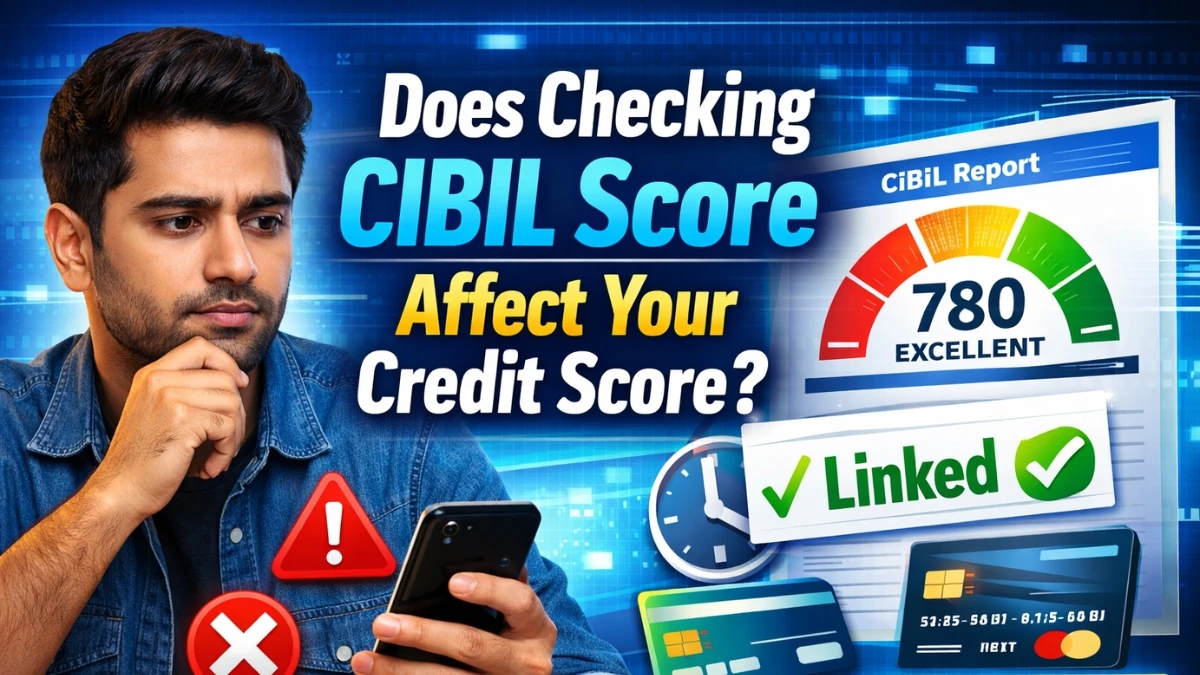
Short Answer: Checking your own CIBIL score is a soft enquiry and does not reduce your credit score. Only repeated hard enquiries by lenders (when you apply for new credit) can have a minor negative impact.
What is CIBIL Score?
- It ranges from 300 to 900, with higher scores (generally 750+) indicating better creditworthiness and increasing your chances of approval with lower interest rates.
- Lenders use it to assess risk: a strong score often means easier approvals, better terms, and higher credit limits.
- Key factors include repayment history (the biggest influence), credit utilisation, length of credit history, credit mix, and enquiries.
- Enquiries are only one piece of the puzzle; timely payments and responsible borrowing matter far more.
Soft Enquiry vs Hard Enquiry: What’s the Difference?
This is the key distinction that clears up most confusion.
Soft enquiry (soft pull):
- Happens when you check your own score on the official CIBIL site, bank apps, or trusted platforms.
- No impact on your credit score whatsoever.
- Not visible to other lenders, so it doesn't signal you're "credit-hungry."
Hard enquiry (hard pull):
- Triggered when a lender pulls your report during a loan or credit card application.
- Can cause a small, temporary dip (often 5–10 points), and multiple ones close together may raise red flags for risk.
- Visible on your report to future lenders and factored into underwriting decisions.
Does Checking CIBIL Score Lower Your Credit Score?
Does checking my CIBIL score myself affect my credit score?
- No. When you view your own score, whether on the official CIBIL website or through a bank app, it's recorded as a soft enquiry. It has zero negative effect on your score.
When can checking CIBIL lead to a lower score?
- Your score might dip slightly if multiple lenders run hard enquiries because you're applying for several loans or cards in a short window. That's not from checking yourself, it's from the applications.
How to Check Credit Score Online?
1. Through the Official CIBIL Website (TransUnion CIBIL)
You get one free full CIBIL Score & Report per calendar year (e.g., if you got it in 2025, your next free on Jan 1, 2026).
- Visit the official site: www.cibil.com or go directly to the free section at myscore.cibil.com for enrolment.
- Click "Get Your Free CIBIL Score & Report" (or similar prompt).
- Register with your details: name, PAN, mobile number, email, and date of birth.
- Verify identity via OTP sent to your registered mobile.
- Access your score, report, and insights instantly (or download PDF).
Paid options exist for more frequent access or monitoring.
2. Via Bank Net Banking or Mobile Apps
Many banks offer free credit score checks (soft enquiry):
- Log in to net banking/mobile app (e.g., HDFC, SBI, ICICI, Axis).
- Look for sections like "Credit Score," "CIBIL Score," or "Credit Health."
- Verify with OTP and view your score (often powered by CIBIL or partners).
3. Through Trusted Third-Party Platforms (Free Monthly Checks)
Platforms partner with bureaus for free regular access:
- Paisabazaar.com → Enter name, mobile, email → OTP verification → Get CIBIL + other bureau scores monthly for free.
- Bajaj Finserv, Aditya Birla Capital (ABCD app), Paytm, or similar → Quick checks with PAN/mobile verification.
- Fintech apps like OneScore, CreditKlick → Provide monthly updates from multiple bureaus.
Always choose RBI-regulated or well-known platforms to avoid scams.
4. Other Bureaus (Experian, Equifax, CRIF High Mark)
- Experian: Visit their consumer portal, register, and get a free report/score.
- CRIF High Mark: Go to crifhighmark.com → Free personal credit score section → Enter PAN, name, mobile.
- Equifax: Similar registration on their site for free access.
How Often Should You Check Your Credit Score?
- Free annual full report from each bureau: Once per year, officially.
- Monthly checks: Safe via apps/banks (soft enquiries, no impact).
- Check quarterly if credit is stable; monthly if improving score, planning big loans, or suspecting issues.
How Hard Enquiries Can Affect Your Credit Score
- Each credit application typically triggers one hard enquiry per lender.
- A bunch of them in quick succession can suggest you're taking on too much debt, making you appear riskier.
- This may result in a small score drop, tougher approval odds, higher rates, or reduced limits.
- The effect is usually temporary (impacts score for a few months to a year), and spacing out applications minimises any harm.
- Tip: Shop around smartly, compare offers first, then apply selectively.
Why You Should Check Your CIBIL Score Regularly
- Track progress as you pay bills and EMIs on time, seeing improvements motivates better habits.
- Catch sudden drops from missed payments, high balances, or unexpected issues.
- Spot unauthorised accounts or fraud early (like loans opened in your name without consent).
- A strong, monitored score lets you negotiate better deals or snag pre-approved offers.
Safe Ways To Check Your CIBIL Score Online
Stick to trusted sources for peace of mind:
- Official CIBIL website (cibil.com) – direct from the bureau, and self-checks are explicitly soft.
- Net banking or mobile apps from major banks that offer free/embedded score checks.
- Reputed fintech or NBFC platforms that clearly label it as a soft enquiry.
Quick tips:
- Use secure, official sites/apps only, look for HTTPS and trusted branding.
- Never share OTPs, full card details, or passwords on shady platforms.
- Confirm the platform states “this will not affect your credit score” before proceeding.
Myths vs Facts About Checking CIBIL Score
| Myth | Reality |
|---|---|
| Checking CIBIL score always reduces credit score | Self-checks are soft enquiries and do not reduce your score at all. |
| You should never check your score more than once a year | Regular self-checks (even monthly) are healthy, recommended, and have no downside. |
| All enquiries are the same | Only lender-initiated hard enquiries can slightly impact your score; soft ones don't. |
| Score drops every time any bank sees it | Multiple hard enquiries in a short time can affect it, not single or self-checks. |
Tips To Protect Your Credit Score When Applying for Loans
- Don't apply everywhere at once; research and shortlist 1–2 lenders first to limit hard enquiries.
- Keep credit card utilisation low (ideally under 30–40%) to buffer any enquiry effects.
- Stay on top of payments, timely EMIs and dues outweigh minor enquiry hits.
- Look for pre-approved offers; some lenders check softly or use existing data.
Disclaimer:
The information provided in this guide is for general informational purposes only and should not be considered as financial or credit advice. The content reflects the most common understanding of credit scores and their impacts, but individual circumstances may vary. Always consult with a qualified financial advisor or lender for personalized guidance regarding credit scores, loan applications, and credit management. The official websites and trusted financial institutions should be your primary source for any credit-related actions. We are not responsible for any consequences arising from the use of this information.
Related Articles



Does Checking CIBIL Score Affect Credit Score - FAQ's
1. Is checking my CIBIL score considered a hard enquiry?
No, self-checks are always soft enquiries and have no impact on your score.
2. How many times can I check my CIBIL score in a month?
As often as you like, monthly or even weekly checks are fine since they're soft and harmless.
3. Do banks see when I check my own CIBIL score?
No, soft enquiries aren't visible to other lenders; only you can see them.
4. Why did my score drop after checking with multiple lenders?
That's likely from hard enquiries during loan applications, not your self-checks, multiple applications close together can cause a dip.
5. Does checking CIBIL score for free on apps reduce my score?
No, if it's a trusted app, labeling it as a soft enquiry, stick to reputable ones to be safe.
Disclaimer : The above information is for general informational purposes only. All information on the Site is provided in good faith, however we make no representation or warranty of any kind, express or implied, regarding the accuracy, adequacy, validity, reliability, availability or completeness of any information on the Site.