What Is a Savings Bond? Meaning, Types and Interest Rates
A Savings Bond is a low-risk government-backed investment that grows with interest over time. Learn how savings bonds work, types, and rates in 2026.
by James
Published Feb 20, 2026 | Updated Feb 20, 2026 | 📖 4 min read
Article continues below advertisement
What is a Savings Bond?
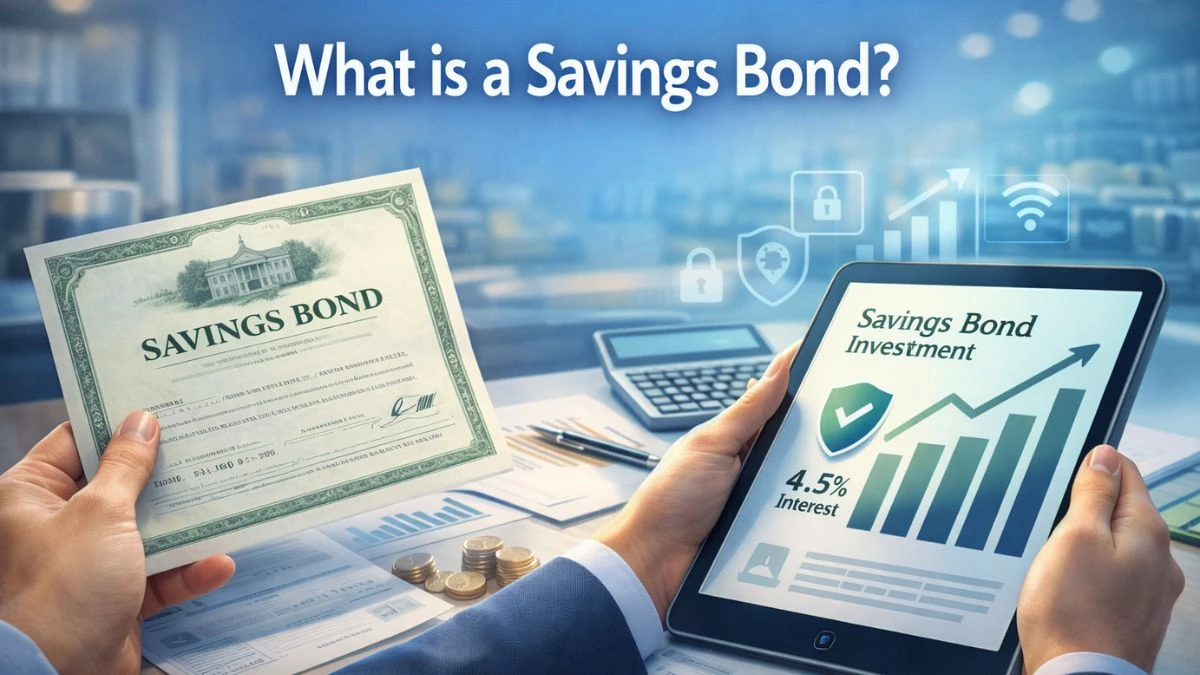
A savings bond is a simple agreement where you lend money to a government and, in return, it slowly pays you back with interest over time. Think of it as the opposite of an impulse buy: you put in money now, forget about it for a while, and one day it has quietly grown.
Savings bonds are usually low-risk because they are backed by the government’s promise to repay, which is why they are often described as one of the safest investment options for small savers.
Unlike market-traded bonds or stocks, savings bonds are designed more for steady, long-term saving than for quick buying and selling. They’re popular for things like building an emergency cushion, setting aside money for a child’s education, or just forcing a bit of disciplined saving.
Many people first encounter them as gifts from parents or relatives those slightly boring but secretly helpful “future you will thank us” presents. Over time, that quiet, predictable growth can make a real difference.
How Savings Bonds Actually Work?
Savings bonds work by locking in your money for a period so it can earn interest month after month, usually for up to 30 years. When you buy one, the government records it in your name (now mostly in electronic form), and the bond’s value increases as interest accrues and compounds. You don’t get constant cash payouts into your bank account; instead, the value of the bond itself grows in the background.
Most modern savings bonds are held online in an account provided by the issuing authority, such as the U.S. Treasury’s TreasuryDirect system for U.S. savings bonds. There is usually a minimum holding period, often 12 months, before you can cash out, and if you redeem too early (for example, before five years), you typically lose a few months of interest as a penalty. It’s a gentle nudge to stay patient rather than treat them like a regular savings account.
Types of Savings Bonds
In the U.S., the two main types of savings bonds available today are Series EE and Series I bonds. Both are low-risk, long-term products but they behave a bit differently, especially when it comes to how interest is calculated.
A quick, informal snapshot:
EE savings bonds
- Earn a fixed interest rate set when you buy them and keep earning for up to 30 years.
- The government guarantees that a new EE bond will at least double in value after 20 years, which effectively sets a minimum long-term return if you hold that long.
I savings bonds
- Combine a fixed rate with an inflation-linked rate that adjusts every six months, so the total rate can move up or down.
- Designed to help protect savings from inflation, with a rule that the overall rate never goes below zero, even if inflation turns negative.
For many savers, EE bonds feel like the “slow and steady, just leave it” choice, while I bonds appeal more during periods when inflation is worrying and people want their savings to keep up with rising prices.
Are Savings Bonds Still Worth It Today?
Savings bonds can still make sense today for people who value safety, predictability, and a government-backed guarantee more than chasing the highest possible return. They are especially useful for conservative savers, parents planning ahead for education, or anyone who wants a low-drama place to park part of their long-term money alongside other investments.
They’re not a full financial plan and won’t replace diversified investing in equities or other assets, but they can play a steady supporting role. A practical approach many use is simple: keep some money in regular savings for flexibility, invest for growth elsewhere, and use savings bonds as a quiet, low-risk anchor in the background. It’s not flashy but for long-term financial stability, that’s often exactly the point.
Disclaimer
This article provides general educational information about savings bonds and does not constitute financial, tax, or investment advice. Savings products, rules, and interest rates may change over time. Readers should verify current details and consult a qualified financial or tax professional before making any investment or financial decisions.
Related Articles



What is a Savings Bond - FAQ's
1. What is a savings bond in simple terms?
A savings bond is a low-risk investment where you lend money to the government, and it pays you back with interest over time. It’s designed for long-term, steady growth rather than quick profits.
2. Are savings bonds safe?
Yes, savings bonds are generally considered very safe because they are backed by the government. While returns may be modest compared to riskier investments, the chances of losing the principal amount are very low.
3. How long should a savings bond be held?
Savings bonds are typically designed to be held for the long term, often up to 30 years. However, many have a minimum holding period (such as 1 year) and early redemption penalties if cashed before a set time, like 5 years.
4. How is interest on savings bonds paid?
Interest on many modern savings bonds is added to the bond’s value and compounded over time instead of being paid out regularly. You receive the accumulated interest when you redeem the bond.
5. Can savings bonds be used for education?
In some cases, savings bond interest can receive tax benefits when used for qualified education expenses, subject to income limits and specific rules. It’s important to check current regulations and eligibility before planning around this benefit.
Disclaimer : The above information is for general informational purposes only. All information on the Site is provided in good faith, however we make no representation or warranty of any kind, express or implied, regarding the accuracy, adequacy, validity, reliability, availability or completeness of any information on the Site.