
How To Refinance Student Loans in 2026: Step-by-Step Guide
Learn how to refinance student loans in 2026, compare lenders, check eligibility, and follow a step-by-step process to lower your interest rate and monthly payments.
by Alaguvelan M
Published Feb 18, 2026 | Updated Feb 18, 2026 | 📖 8 min read
Article continues below advertisement
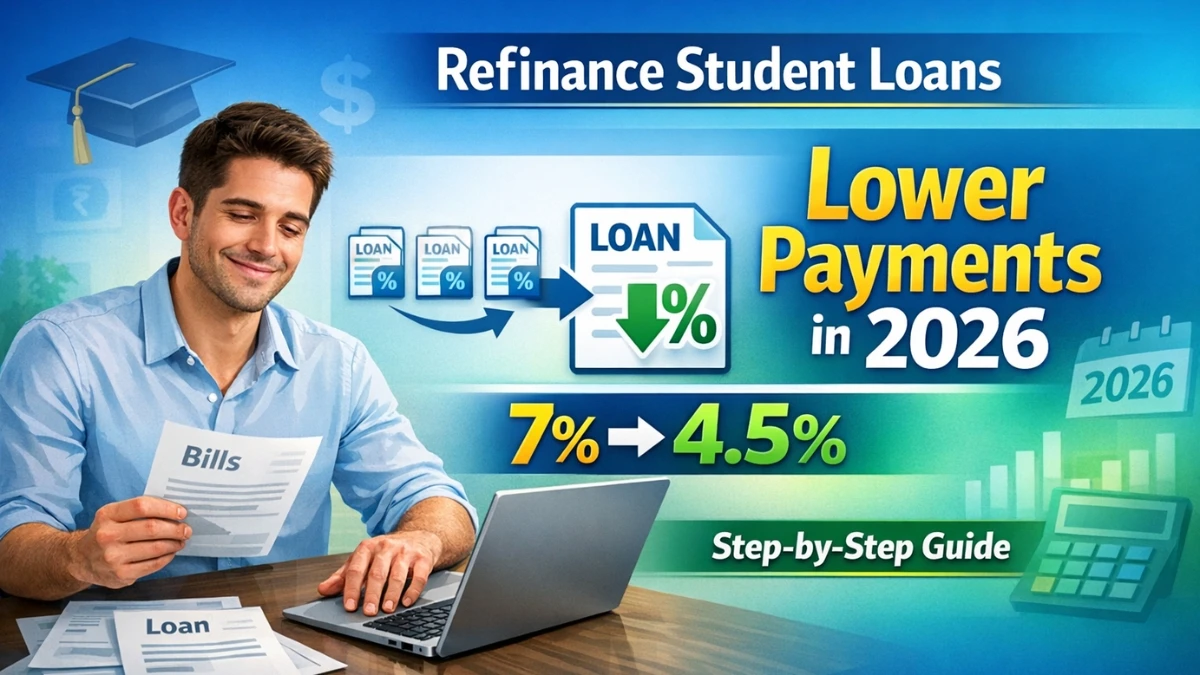
How To Refinance Student Loans: Step-by-Step Guide for 2026
Hey there, if you're buried under student loans and wondering if there's a way to make things easier, you're not alone. Refinancing could be a smart move to cut down on interest or simplify your payments.
In this guide, we'll walk through everything you need to know for 2026, from the basics to the nitty-gritty steps. Let's dive in and see if this fits your situation.
Introduction
Picture this: you've got a pile of student loans from different lenders, each with its own due date and interest rate eating away at your budget. Student loan refinancing basically means taking out a new loan to pay off the old ones, often at a better rate or with simpler terms.
The big wins? You could snag a lower interest rate, shrink your monthly payments, or combine everything into one easy bill. We're talking potential savings on interest over time, especially if you're dealing with federal or private loans, or both. Just keep in mind, this works best if your finances are solid and you're okay ditching any federal perks.
What is Student Loan Refinancing?
Alright, let's break it down simply. Refinancing your student loans means replacing your current loans with a fresh one from a private lender.
The goal? Better terms, like a lower interest rate or a repayment plan that fits your life better. It's not the same as consolidation, though; consolidation just bundles federal loans together at a weighted average rate, without changing much else. Refinancing, on the other hand, can actually lower your rate if you qualify.
What Does It Mean to Refinance Student Loans?
Essentially, a private lender pays off your existing loans, and you start fresh with them. This could mean fixed rates starting as low as 3.99% or variable ones around 3.84%, depending on the lender. You might end up with one payment instead of juggling several, which is a huge relief.
Student Loan Refinancing vs Consolidation
Consolidation is a federal program that combines your government loans into one, but your rate stays about the same; it's just an average of what you had.
Refinancing is private and can drop your rate, but you lose federal protections like forgiveness options. If you've got only private loans already, refinancing won't cost you those benefits.
Types of Loans You Can Refinance
You can refinance private loans, federal ones (which then become private), or a mix. Just note that once federal loans go private, there's no going back to things like income-driven repayment.
Pros and Cons of Refinancing Student Loans
Refinancing isn't a magic fix, it's got upsides and downsides. Let's weigh them out so you can decide if it's worth it for you.
Benefits of Refinancing Student Loans
First off, a lower interest rate can save you thousands over the loan's life. Imagine knocking your rate down from 7% to 4.5%, that adds up fast. You might also lower your monthly payment by extending the term, or pay off debt quicker with a shorter one.
Plus, consolidating into one loan means fewer headaches with due dates. Some folks see long-term interest savings of $10,000 or more, especially with strong credit.
Risks and Downsides
The big one? If you refinance federal loans, you wave goodbye to perks like Public Service Loan Forgiveness (PSLF), deferment, or income-based plans.
Variable rates could rise over time, and a longer term might mean paying more interest overall. Also, if your credit isn't great, you might not qualify or could end up with a worse rate.
When Does It Make Sense To Refinance?
Timing is everything. Refinancing shines when your situation lines up just right, don't rush it if you're not ready.
Situations When Refinancing Is a Good Idea
Go for it if you've got a solid credit score (think mid-600s or higher), steady income, and current market rates are lower than yours. It's perfect if you don't need federal forgiveness programs and want to slash interest or speed up payoff.
For instance, if rates have dropped since you borrowed, or your credit has improved, you could lock in savings now.
When You Should Avoid Refinancing
Skip it if you're chasing PSLF, on an income-driven plan, or have shaky job security; federal safety nets are gold there. If your credit score is low or debt-to-income ratio is high, you might not get approved or could face higher rates.
Also, with federal changes coming in 2026 like fewer IDR options, think twice if those protections matter to you.
Eligibility Requirements for Student Loan Refinancing
Not everyone qualifies; lenders want to know you're a safe bet. Here's what they're checking.
Common Lender Criteria
- You'll typically need a credit score in the mid-600s, stable employment, and a debt-to-income ratio under 50%. Some require a degree, and you must be a U.S. citizen or permanent resident. Income matters too, aim for consistent pay to show you can handle payments.
Can You Refinance Without a Cosigner?
- Sure, if your credit and income are strong enough. But a cosigner with good credit can boost your chances and snag a lower rate. Many lenders offer cosigner release after 12-36 on-time payments, so it's not forever.
How To Refinance Student Loans: Step-by-Step
Ready to pull the trigger? Here's your roadmap. Follow these, and you'll be set.
- Step 1: Evaluate Your Current Student Loans
- List out every loan: balances, rates, payments, and terms. Check if they're federal or private, and calculate what you're paying in interest now.
- Step 2: Decide What You Want to Achieve
- Lower payments? Faster payoff? Fixed vs. variable rate? Know your goals, like aiming for a 5-10 year term to save on interest.
- Step 3: Check Your Credit Score and Improve It if Needed
- Pull your credit report and fix errors. Pay down debts, make on-time payments, bump that score up for better offers.
- Step 4: Compare Student Loan Refinance Lenders
- Shop around lenders like SoFi, Earnest, RISLA, or Nelnet Bank. Look at rates (fixed 3.99%-10.15%), terms (5-20 years), fees, and perks like autopay discounts.
- Step 5: Get Prequalified and Check Your Estimated Rate
- Use soft-credit checks to see offers without dinging your score. Compare a few to find the best fit.
- Step 6: Choose the Best Offer and Submit a Full Application
- Gather docs: ID, income proof, payoff statements. Apply, approval can take days to weeks.
- Step 7: Approve the Loan and Wait for Payoff
- Once approved, your new lender pays off the old ones. It might take 1-2 weeks.
- Step 8: Set Up Autopay and Track Your Progress
- Enroll in autopay for a 0.25% rate cut (common perk). Monitor payments to stay on track.
How To Refinance Federal vs Private Student Loans
The process is similar, but the stakes differ based on loan type.
Refinancing Federal Student Loans
You can do it, but you'll lose federal benefits like forgiveness or deferment. Only go this route if you're sure you won't need them—maybe if your rates are high and you're in a stable spot.
Refinancing Private Student Loans
Easier call here, no federal perks to lose. Focus on grabbing a lower rate or better terms to save money.
Refinancing a Mix of Federal and Private Loans
You can refinance just the private loans to keep federal protections, or bundle all if the savings outweigh the risks.
How To Choose the Right Student Loan Refinance Lender
Don't pick the first one; compare to win.
Key Factors To Compare
- Rates (fixed vs. variable), terms (5-20 years), fees (origination or prepay?), hardship options, and customer service. Look for no-fee lenders and good apps for easy management.
Discounts and Special Offers
- Autopay shaves 0.25% off rates, loyalty bonuses exist, and some give cash for referrals.
Tips To Get the Lowest Refinance Rate
Want the best deal? Here's how to stack the odds.
- Boost your credit score first—pay bills on time, cut utilization.
- Lower other debts to improve your DTI.
- Add a cosigner if needed for better approval odds.
- Opt for a shorter term if you can swing the payments; rates are often lower.
- Shop multiple lenders and snag autopay discounts.
Common Mistakes To Avoid When Refinancing
Learn from others' slip-ups to keep things smooth.
- Don't refinance federal loans without weighing the lost benefits.
- Avoid variable rates if you hate uncertainty; they can climb.
- Don't extend terms just for lower payments; you'll pay more interest long-term.
- Always compare lenders; missing out on better offers costs you.
- Check for hidden fees or penalties before signing.
Disclaimer:
The information provided in this article is for general educational and informational purposes only and should not be considered financial, legal, or investment advice. Interest rates, eligibility criteria, repayment terms, and government policies related to student loans may vary by country, lender, and individual circumstances. Readers should verify details with official government websites, loan servicers, or qualified financial advisors before making refinancing decisions. Examples used in this article are illustrative and may not reflect actual loan offers or outcomes.
Related Articles




How To Refinance Student Loans - FAQ's
1. What does refinancing a student loan mean?
Refinancing means replacing one or more existing student loans with a new loan, usually from a private lender, often to get a lower interest rate or simpler repayment terms.
2. Does refinancing lower monthly payments?
It can lower monthly payments if you qualify for a lower interest rate or choose a longer repayment term, but a longer term may increase total interest paid.
3. Can federal student loans be refinanced?
Yes, but refinancing federal loans with a private lender means losing federal benefits like income-driven repayment and loan forgiveness programs.
4. What credit score is needed to refinance student loans?
Most lenders prefer a credit score in the mid-600s or higher, along with stable income and a reasonable debt-to-income ratio.
5. How long does student loan refinancing take?
The process typically takes a few days to a few weeks, including application, approval, and payoff of existing loans.
Disclaimer : The above information is for general informational purposes only. All information on the Site is provided in good faith, however we make no representation or warranty of any kind, express or implied, regarding the accuracy, adequacy, validity, reliability, availability or completeness of any information on the Site.